Colleagues discussing work in a manufacturing environment

From local roots to global markets

Internationalisation for German Mittelstand companies

Many Mittelstand firms lead global niches while remaining anchored in their home regions. International growth works best when market access, talent and operational risk are approached as one strategy.

Explore the full perspective ↓
Partnerships built person to person
Export Niche leadership
Talent International skills
Partners Trusted networks
Resilience Diversified markets
01

Local roots. Global reach.

International growth should scale the advantage without diluting trust or quality.

Companies often enter a market because customers ask them to follow, a specialist distributor opens a door or local service becomes essential. Growth works when opportunity is matched with governance, talent and operational realism.

Three lenses

01

Market

Validate demand and service needs before adding fixed cost.

02

People

Build language, culture and leadership into expansion planning.

03

Control

Define quality, compliance and partner responsibilities early.

Industrial product team comparing samples for a new market 01 Mittelstand internationalisation
Chapter 01

Choosing the right market-entry model

Export, distribution, licensing, joint ventures and direct investment create different levels of control and risk. The right model depends on customer proximity, service requirements, regulation and the value of local production.

Begin with the buying process. Identify who specifies the product, who approves the budget and who needs support after delivery. A distributor may improve access, while a local service presence may be more important for equipment requiring maintenance. Compare the alternatives using the same assumptions for customer acquisition, service response and management effort. A larger local footprint only helps when it solves a clearly identified customer need.

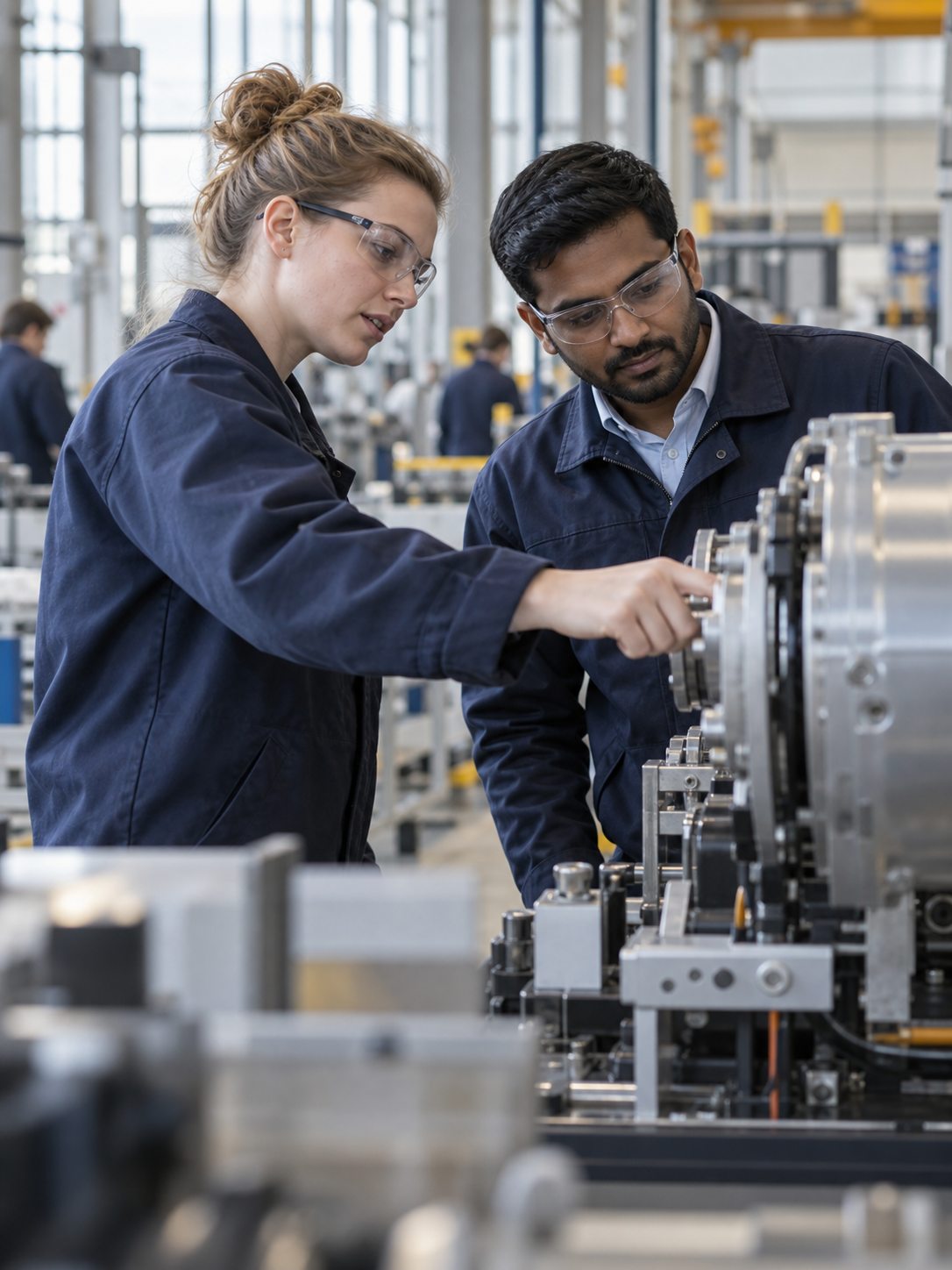
German and Indian engineers inspecting an industrial assembly together 02 German SMEs India
Chapter 02

India as a growth and talent partner

India offers a large customer market, engineering and digital capabilities, manufacturing depth and a young workforce. Successful cooperation requires regional focus, reliable partners and preparation for differences in procurement, decision-making and compliance.

Treat India as a collection of potential customer and partner contexts rather than a single uniform opportunity. Define the application, buyer segment and service model before choosing where to focus. For a first partnership, agree what will be demonstrated, how quality will be checked and which team owns follow-up. Evaluate communication and delivery through a bounded pilot before committing to a larger operating structure.

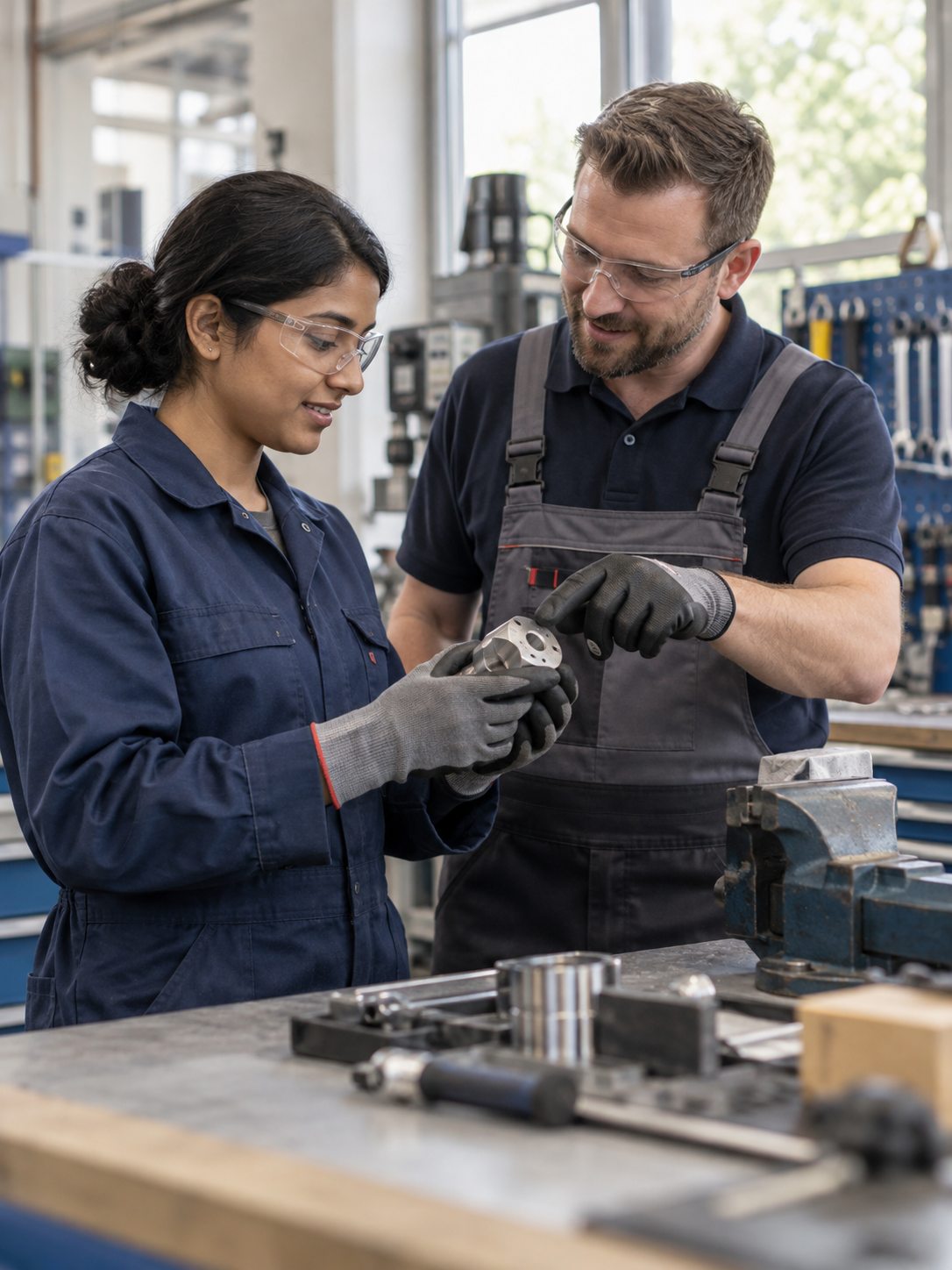
New colleague receiving workshop safety training from a team lead 03 German SME export
Chapter 03

International skilled workers

Recruitment should start with a precise role profile and a lawful migration pathway. Language, recognition, technical preparation, relocation and workplace integration must be designed as one process, not separate handovers.

An international recruitment project needs both a role plan and an integration plan. Specify the work, required qualifications, language needs and who will supervise onboarding. Make it in Germany provides official orientation for employers exploring recruitment routes. The applicable administrative requirements depend on the individual case, so confirm them through the responsible channels. Plan practical support alongside the hiring process instead of leaving it until arrival.

Two partner-company engineers jointly measuring a manufactured part 04 international recruitment Germany
Chapter 04

Building resilient partnerships

Strong international relationships depend on documented responsibilities, commercial transparency, quality controls and a clear escalation path. Pilot projects can validate assumptions before scale.

A partnership agreement is easier to operate when the teams have already discussed everyday situations. Who answers a technical question? Who handles an urgent customer complaint? How is a change to the specification approved? Document these processes alongside the commercial terms. Use regular reviews to compare delivery, customer feedback and unresolved issues, rather than allowing the relationship to depend on informal contact between two individuals.

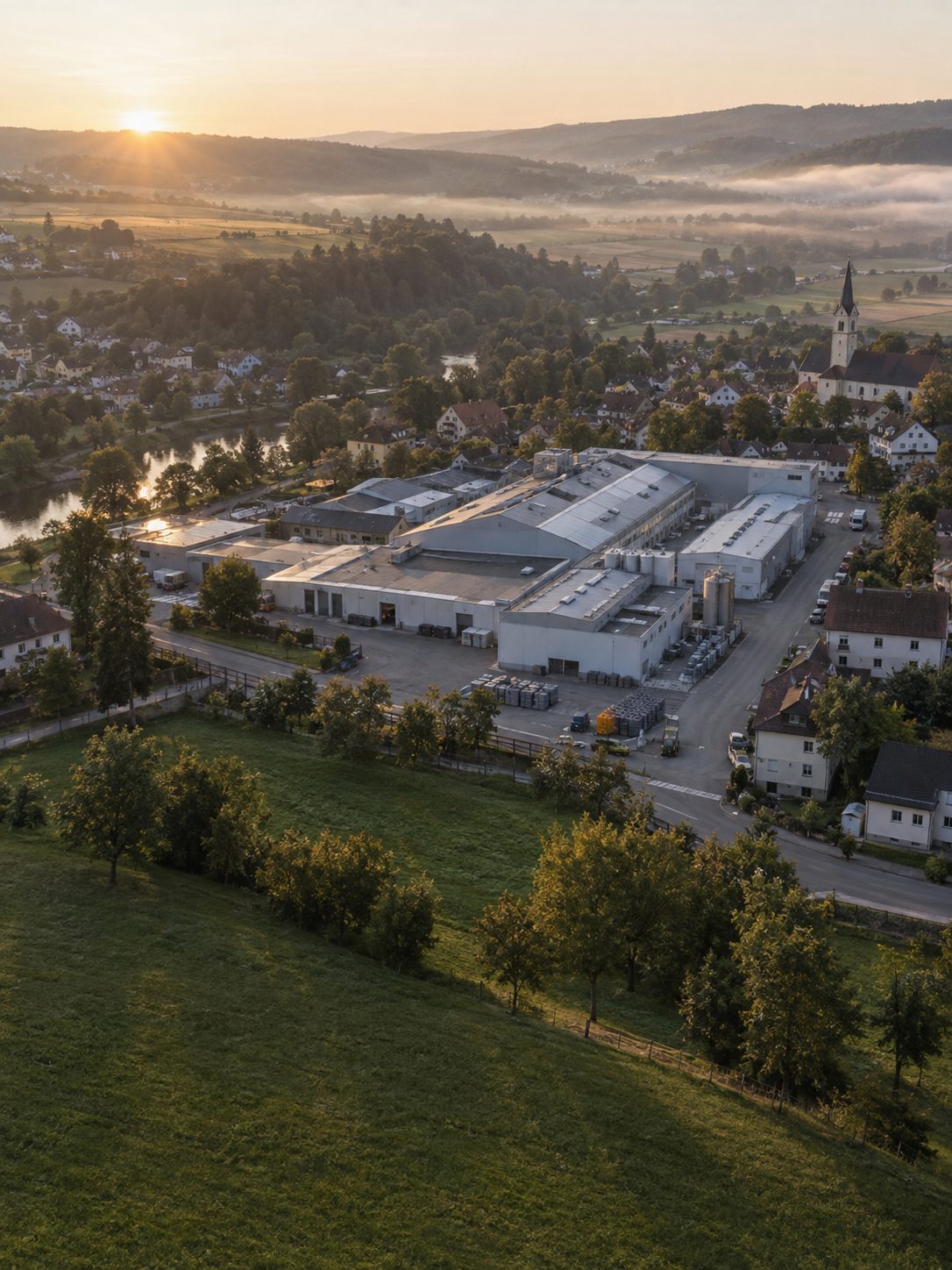
Family-owned factory at the edge of a small European town 05 market entry Germany India
Chapter 05

Keeping the regional anchor

International growth does not require abandoning local identity. Global revenue, diverse talent and overseas capabilities can strengthen headquarters, apprenticeships and innovation at home.

Protect the knowledge that makes international expansion possible. Identify which activities remain central, which can be delivered locally and how technical learning returns to the wider organisation. Keep product documentation, quality expectations and escalation responsibilities consistent across locations. International teams should have access to the expertise they need without routing every routine decision through headquarters. That balance requires deliberate training and clear decision rights.

The Mittelstand reference

Messe: turn a trade-fair visit into a working plan.

Trade fairs bring product demonstrations and business conversations together. Select an event by its audience and sector, set meetings before travelling, and assign follow-up responsibility for each useful contact.

Sector to exploreEvents to research
Industry and automationHANNOVER MESSE
Automotive aftermarketAutomechanika
Medical technologyMEDICA
Construction machinerybauma
Printing and packaging technologydrupa
IntralogisticsLogiMAT
Food and beveragesAnuga
Process industriesACHEMA
Consumer goodsAmbiente / Christmasworld
Travel and tourismITB Berlin

Check the organiser, venue, dates and sector fit through AUMA’s trade-fair database . Attendance figures and event dates change, so plan from the current event listing.

The Mittelstand reference

Build your market shortlist with local contacts.

The older site’s wider market coverage is useful as a research map. Compare customer demand, after-sales needs, partner capabilities and country-specific requirements before choosing a market-entry model.

Southeast Asia

Start with the AHK network to identify the country office that matches the opportunity.

Official resource

Gulf markets

The German Emirati chamber is one starting point for UAE business questions.

Official resource

Compare your options

Compare international market-entry models

Compare international market-entry models
ModelPotential advantageQuestion to resolve
Direct exportA focused first route to customersWho provides local service?
DistributorAccess to an existing market networkHow will performance and coverage be assessed?
Local service presenceCloser support for installed productsIs recurring demand sufficient?
Joint venture or subsidiaryGreater local operating capabilityCan the business support the governance required?

Put the guide to work

Design a useful first international pilot

A practical framework from Mittelstand United. Adapt these steps to your business, operating context and available evidence.

  1. 01

    Choose one customer problem

    Specify the application and what success would look like for the buyer. Limit the pilot to a scope that can be delivered and evaluated by named people on both sides.

  2. 02

    Agree the operating rules

    Record responsibilities for specifications, quality checks, communication and service. Identify the points that require country-specific professional advice before a commercial commitment.

  3. 03

    Review the full cost of delivery

    Assess not only revenue but travel, support effort, rework and management attention. Decide whether the next step should repeat, adapt or expand the model.

Go to the source

Continue with the official sources.

The AHK network connects businesses with market-specific international expertise. Read the source Make it in Germany provides employer guidance on international recruitment. Read the source

AHK: the German Chambers of Commerce Abroad Make it in Germany: international recruitment process
Source links checked 9 September 2026. Chapter images are AI-generated illustrations and do not identify a featured company or location.

Frequently asked questions

Clear answers,
useful context.

When should an SME establish a foreign entity?+

When customer proximity, hiring, service delivery, regulation or recurring volume justify the additional cost and governance.

Can international recruitment solve every vacancy?+

No. It is most effective for clearly defined, persistent shortages and requires serious integration planning.

Why use a pilot first?+

A pilot tests role fit, partners, timing, costs and communication before larger commitments.

Is a foreign subsidiary necessary to start exporting?+

Not always. The appropriate model depends on customer access, service needs and the requirements of the target market. Compare direct export and partner-led routes before committing to a permanent local operation.

Your next conversation

Bring your next question.

Discuss your business context, explore the connected guides or start a conversation with Mittelstand United.

Connect with Mittelstand United ↗

Continue exploring

Understanding the Mittelstand What is the German Mittelstand? ↗ Transformation agenda The biggest challenges facing German SMEs ↗ Germany’s support ecosystem Support and funding for German SMEs ↗